
Teaching and Learning
Forest Edge Federation Teaching and Learning Policy
Teaching and Learning the Woolaston Approach
The Woolaston Primary School approach to teaching and learning is built on, supports and develops the school vision and values. The teaching and learning environment and methodology drives a high aspirational culture which fully encompasses and supports the school mission and ethos.
Teaching and Learning Approach
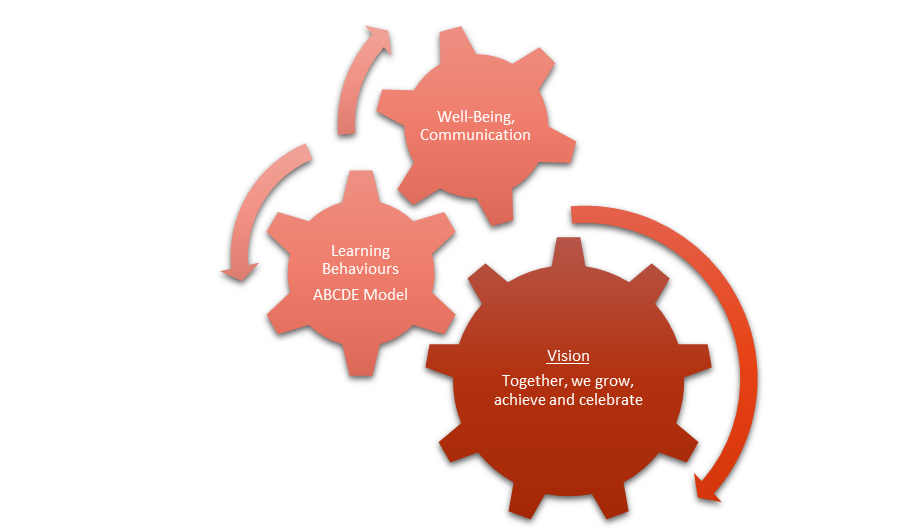
Curriculum Intent
The teaching and learning approach aligns with the curriculum intent and together they set out what and how the children learn and develop knowledge, skills and understanding.
We aim for our children to leave Woolaston Primary School with the knowledge, understanding, attitudes, skills and motivations which will help them to develop a love of learning and allow them to tackle whatever challenges their future holds.
We believe that the subjects that we teach through the National Curriculum and the Woolaston Curriculum should enable children to:-
- Be positive individuals that are able to effectively recognise and articulate their thoughts, feelings and emotions.
- Show resilience in the face of challenges in regards to academic, pastoral and social development. Understanding they may not succeed straight away and have the confidence to make mistakes.
- Be empathetic humans that show understanding and kindness to all, demonstrating an awareness how they affect one other
- Develop an intrinsic motivation to allow children to be inspired and experience a sense of awe and wonder.
- Learn and achieve whilst developing the skills needed to become responsible members of society that lead rich and productive lives.
An Aligned Vision and Teaching and Learning Approach
|
Vision |
Together |
We Grow, Achieve |
And Celebrate |
|
Values |
Compassion Respect |
Perseverance Courage |
Thankfulness Friendship
|
|
Curriculum Drivers |
Community Inclusivity global awareness British values |
Engagement Learning Behaviours teaching and Learning model Growth Mindset mindfulness wellbeing- |
Involvement Inclusivity
|
‘Together’
We believe that the well-being of all members of our school community is at the heart of our ethos. Our drive to work together is rooted in our commitment to Compassion, Respect, and Community. We strive to create an environment of Inclusivity where everyone feels valued and heard. By fostering Global Awareness and upholding British Values, we aim to build a collaborative and supportive community that celebrates diversity and works towards a better future for all.
We Grow, Achieve
At the heart of our learning philosophy is the belief that We Grow and Achieve through Perseverance and Courage. By focussing on creating engaged learners who develop key learning behaviours and show a ‘can-do’ attitude our pupils embrace challenges and learn from them. We prioritise mindfulness and wellbeing, ensuring that our learners are not only academically successful but also emotionally resilient and independent.
And celebrate
Through a curriculum which is engaging and adaptive we aim to develop confident and ambitious learners. We celebrate the individual and collective achievements of our community, fostering an environment of thankfulness and friendship. Through active Involvement and a commitment to Inclusivity, we ensure that everyone has the opportunity to succeed and be inspired. Together, we create a supportive and uplifting atmosphere where every accomplishment is recognised and valued.
Key Learning Behaviours
Our Learning behaviours are how children demonstrate our school vision through their work and learning.
Through active reflection and evaluation, we teach children to show:
- Resilience; children who are willing to persevere, make and learn from mistakes. When facing challenges, who have the ability to pick themselves up, bounce back, try a new approach and keep on trying by using a bank of strategies and collaborative coaching skills.
- Risk Taking - Children who take a trial and error approach and demonstrate a creative approach. They question and ask "What if...?" and "What shall we try now?" - Children who push themselves to try new things and know that learning is sometimes uncomfortable!
- Communication
Children are encouraged to listen carefully and share their ideas, which helps them think critically about how to approach tasks. They learn to value their own ideas and those of others, and to develop strategies for answering questions and solving problems. All members of the school community are encouraged to reflect on their work and to explain their thoughts, ideas, and learning choices. By practising good communication, students learn to collaborate, solve problems, and understand different perspectives. This helps them build strong relationships and become confident, thoughtful members of our school community
- Innovation We aim for children to believe that they can use strategies and resources to help themselves when they are stuck, but also know when and who to ask for help when needed. Children are encouraged to want to find out for themselves and are skilled to be able to do so. Children are motivated and excited to learn, developing their own ideas, thinking and interests, leading their own learning in a creative and active way.
Collaboration. We aim for children to be able to learn with and from each other in a variety of ways, listening to the ideas and opinions of others and developing their own skills in a supportive environment, as well as encouraging others to achieve and work to the best of their ability. Woolaston pupils are team players who respect difference of opinion who negotiate and cooperate in a range of tasks and activities. We encourage children to take a pride in their own work and achievements and those of others.
Learning Behaviours I Can statements for children.
Collaboration
I can work, share and take turns with others by listening to, considering and using their ideas as well as my own.
Communication
I can share my thoughts and listen to others so we can learn together and understand each other.
Resilience
I stay positive and believe that I can learn from my mistakes by trying something different even when things are hard.
Risk Taking
I believe that ‘I can’ and challenge myself to try new things
Innovation
I can think of new ideas and try different ways to solve problems.
Reflection
I can stop, think, celebrate what I have learnt and what I can do to improve. I recognise when I need help.
The Woolaston Teaching and Learning Cycle
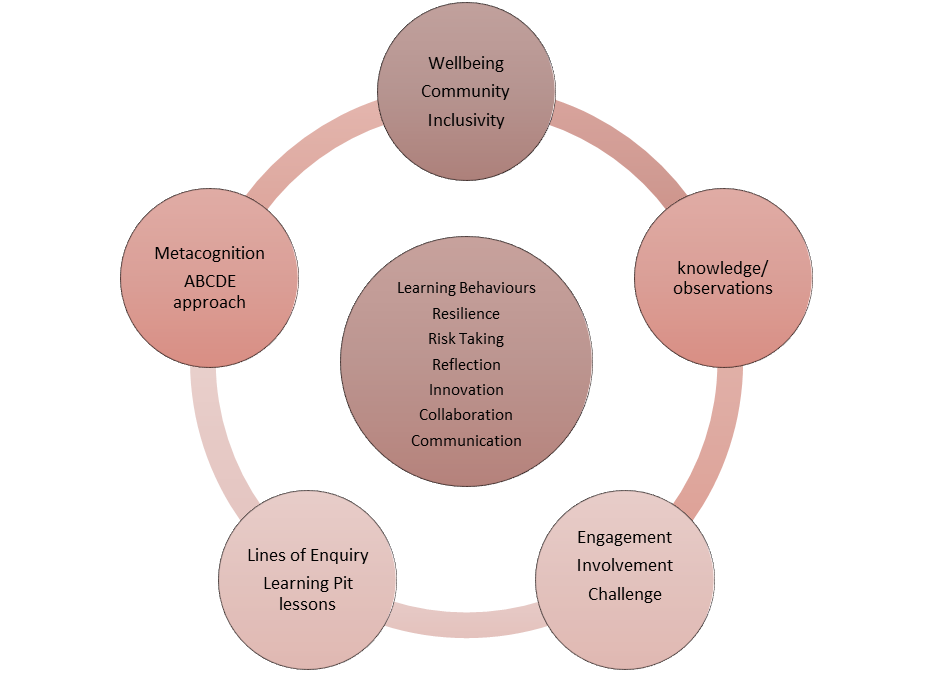
ABCDE Approach
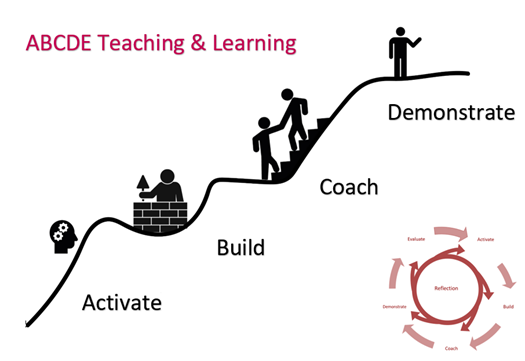
The ABCDE model is a bespoke metacognitve approach developed by the staff team at Woolaston. It is both a teaching paradigm and a method for children to develop themselves as independent learners. Metacognition enables learners to monitor their own learning, make choices and changes as appropriate. It allows learners to be in control of their learning. The ABCDE approach is the way in which we teach and support children to apply metacognitive principles to their own learning.
The Woolaston ABCDE metacognitive approach involves teachers modelling the planning, monitoring and evaluation of learning and children planning, modelling and evaluating their own learning during each stage of the learning process.
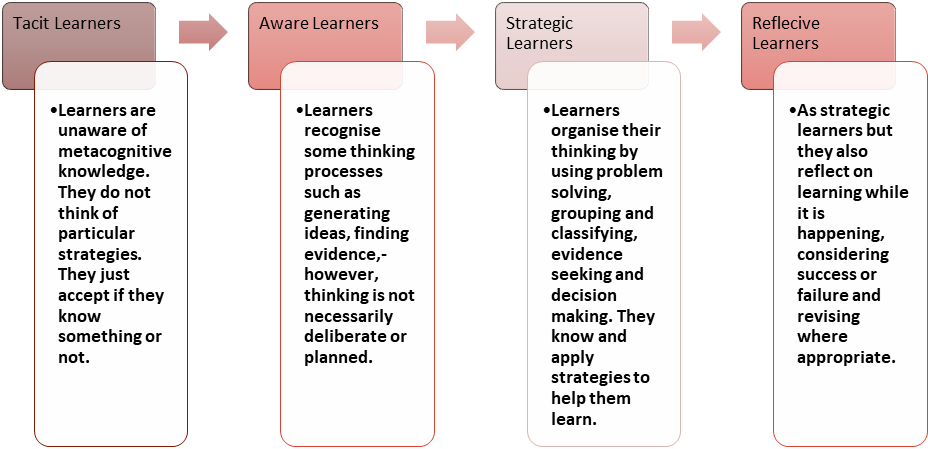
Both teaching and using reflection as a learning strategy are an important aspect of the ABCDE approach and enables learners to develop from tacit learners through to aware, strategic and, finally, into reflective learners.
ABCDE Model with Continual Reflection
Teachers use the ABCDE model to help children develop their metacognitive knowledge and self-regulation skills. Children are encouraged to reflect on their learning through each of the planning, monitoring and evaluation stages of learning in order to assess what they have learnt, what they need to do next and how successful they have been. Children are encouraged to think about their next steps towards learning and to use this reflection to create change.
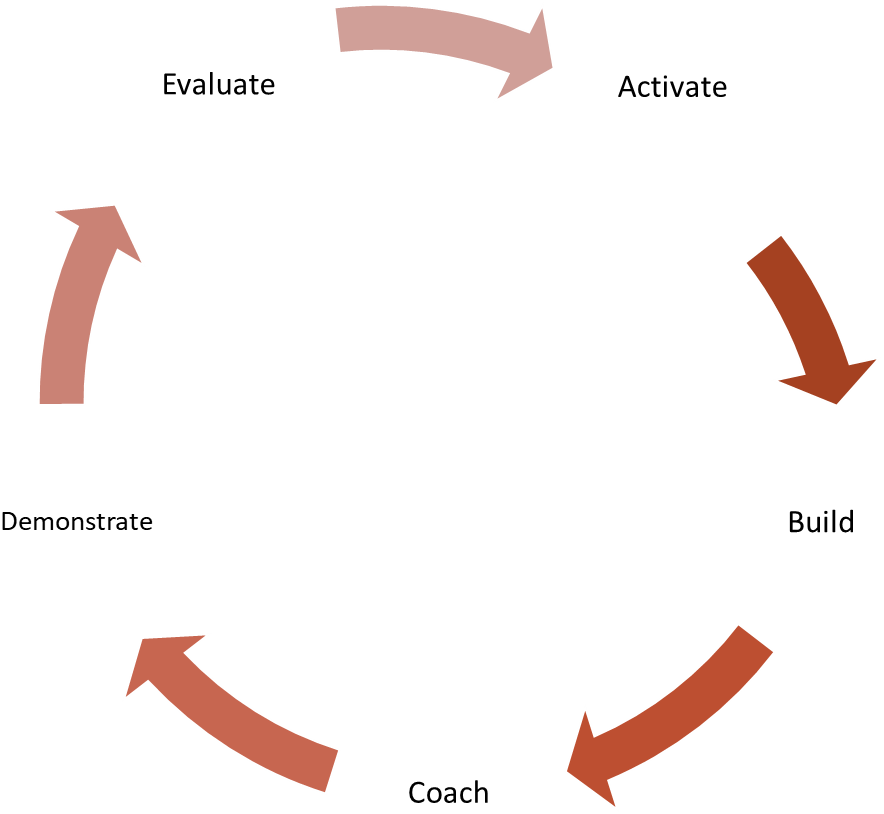
The ABCDE model encompasses the seven steps of metacognition, and develops the three stages, planning, monitoring and evaluating.
|
Metacognitive phase |
Metacognitive steps |
ABCDE model |
|
Planning |
Activate prior knowledge Explicit strategy instruction modelling of learning strategy, Guided practice |
Activate,
Build
Coach |
|
Monitoring |
Independent practice |
Demonstrate |
|
Evaluating |
Structured reflection |
Evaluate |
- A Activate prior knowledge, new learning and/or understanding and learn new strategies
- B Build on learning through explicit strategy instruction, modelling of a learnt strategy, memorisation of learnt strategy.
- C Coaching guided practise, support, use of strategies
- D Demonstrate pupil demonstrates their knowledge and understanding through independence in understanding, working and use of strategy.
- E Evaluate through ongoing reflection, review strategies, understanding,
Teaching and Supporting Reflection
Stickers and certificates
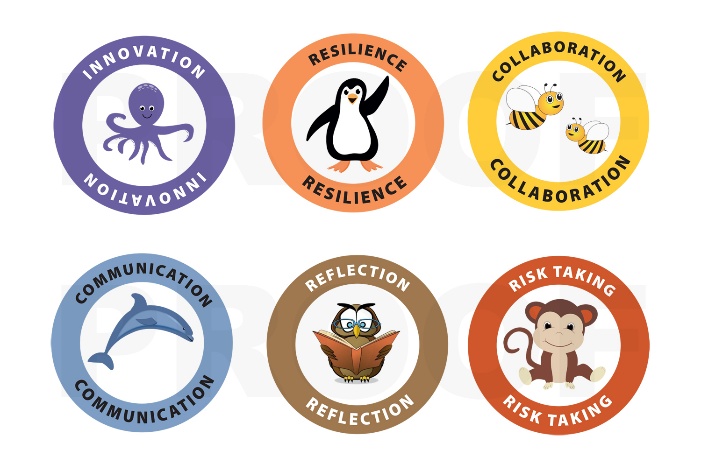
Each learning behaviour has a related sticker. Learning behaviours may be identified as one of the learning objectives for the lesson or series of lessons. Teachers indicate, or elicit ideas from children to identify which learning behaviours could be used in each activity. Staff reward children who have shown a specific learning behaviour within their attitude, behaviour or work, with relevant stickers. Children are also encouraged to reflect on their own learning to identify learning behaviours that they have used, selecting and awarding themselves stickers to reflect their effort and achievements.
Learning Behaviour Certificates.
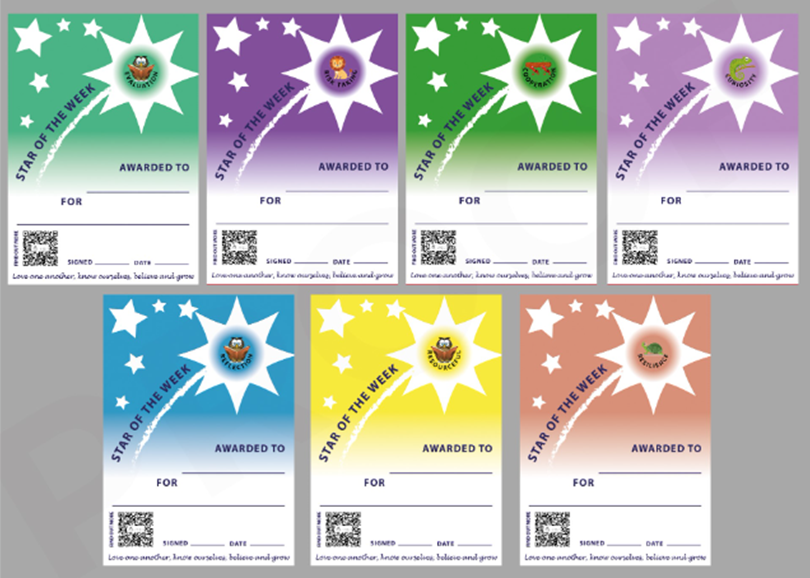
Certificates are used to communicate with children and parents about the specific learning behaviours that have been used by children in a week. Their distribution forms part of a weekly celebration assembly and helps children to develop their knowledge and understanding about learning behaviours and how they can support learning. A QR code allows parents to read about each learning behaviour and how it supports the school vision, values and children’s academic learning.
Feedback
Appropriately timed, oral and written feedback provides opportunities to move learning forward. Teachers aim to communicate with all children during a session, providing feedback which will help them improve a specific piece of work, use appropriate strategies or learning behaviours and develop their self-regulation strategies. Children are encouraged to respond to their feedback, orally and as appropriate in writing, by using reflection journaling or completing the knowledge schema.